
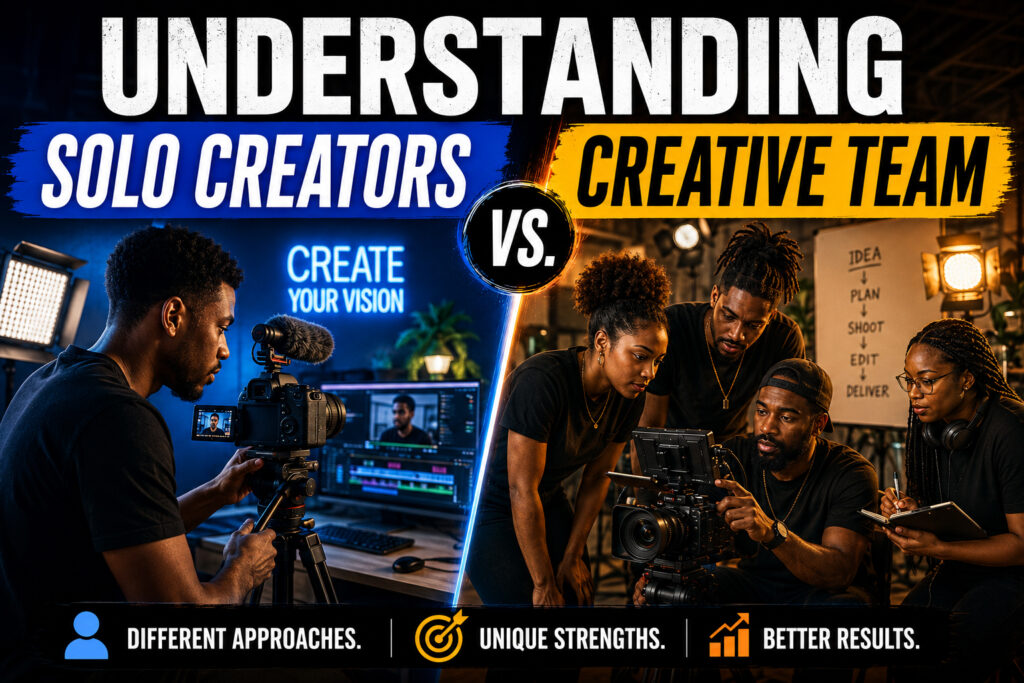
The process of creating video content can vary in complexity. But at the core of every video production, there are core functions that are the same in purpose but may be different in size depending on the scope of the project. The purpose of this article is to provide a little insight to people seeking media services and also to the media professionals who support them.
Being a solo creator, which basically means you are a one-man band, has some benefits as well as disadvantages.
BENEFITS OF BEING A SOLO CREATOR
- It allows you to start flexible and gives your the ability to pivot fast. This is also great if you are working with a client who is a one-person shop or has a small team.
- It allows you to build a great relationship with your client. You will tend to understand there needs a little more and you can anticipate and react without much effort.
- You learn multiple rolls. It gives you a greater understanding of the media space and you grow your skillset exponentially fast.
DISADVANTAGES OF BEING A SOLO CREATOR
- The pressure of doing multiple things in a production.
- Although you learn how to function in multiple roles, it takes you longer and makes it difficult to master certain roles.
- Perception in reality when it comes to billing. Although you may be good at what you do, inherently the client feels differently about paying an individual even close to what a full production team what cost.
This photo is an example of a setup that you may see from a solo creator.
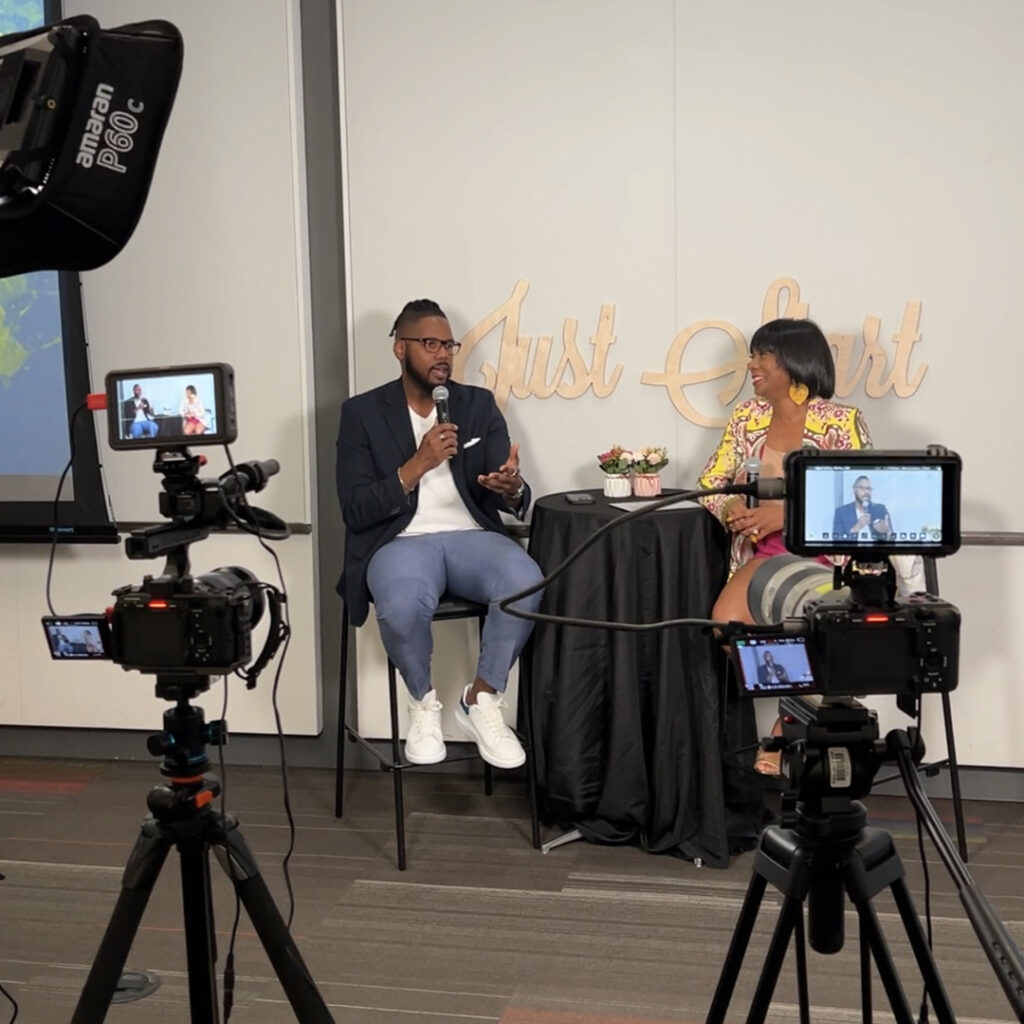
CREATIVE TEAM: FULL SCALE PRODUCTION
So, based on everything just mentioned in the solo creator realm, let’s take a look at what is involved in a full-scale production. Below are some images from a recent show at the Walter E. Washington Convention Center. Below each photo will be the specific role that person/station is providing to produce Live media for the show as well as recorded media to deliver to the client.
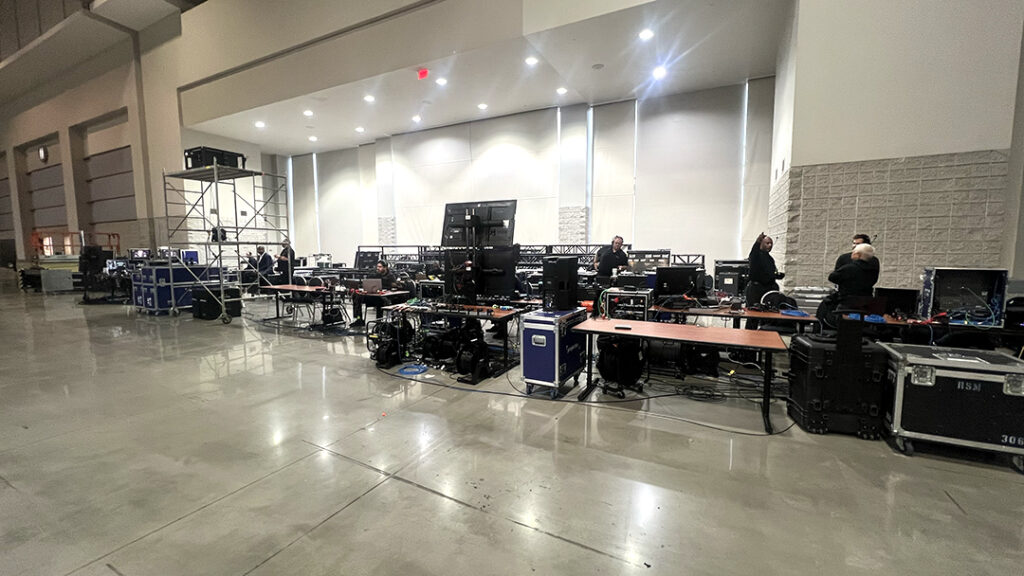
Video World: The place behind the curtain that the audience never sees. This is where all of the media magic happens. They control what the audience sees as well as the content that is delivered to the client at the end of the show. Everything is done live, so there is no editing involved after the production has ended.
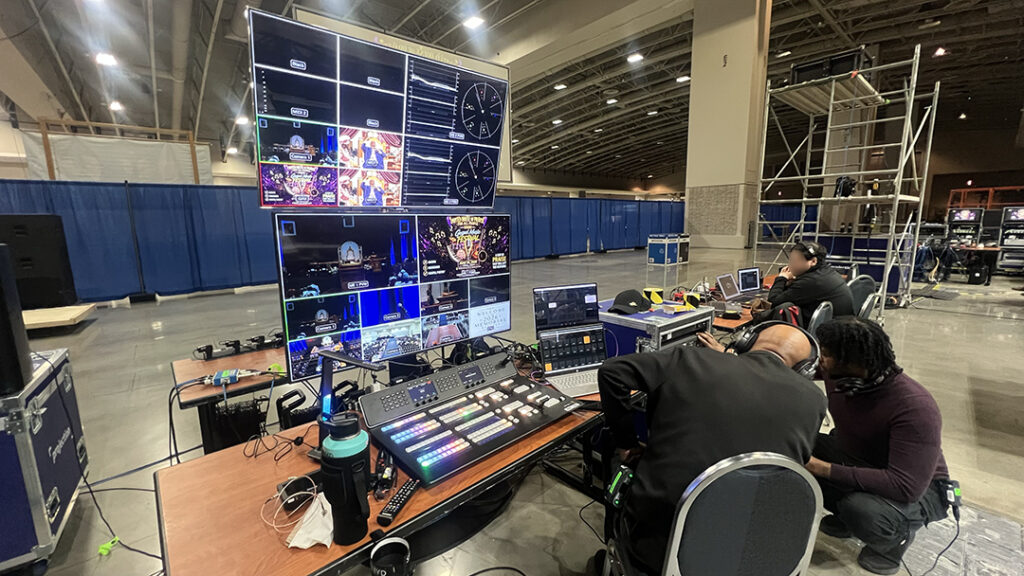
This is the video switcher and show caller. He receives a video feed from all of the cameras in the show. For this show, there were 4 cameras that had camera operators and there were 3 robo cams that were hanging in the air. He sees what the camera sees and tells the camera operators what he needs from them as far as camera shots. His job is also to send the best camera angle/shot to the 6 large screens that the audience sees. Whatever switching he does, that signal goes to the recording station as well.
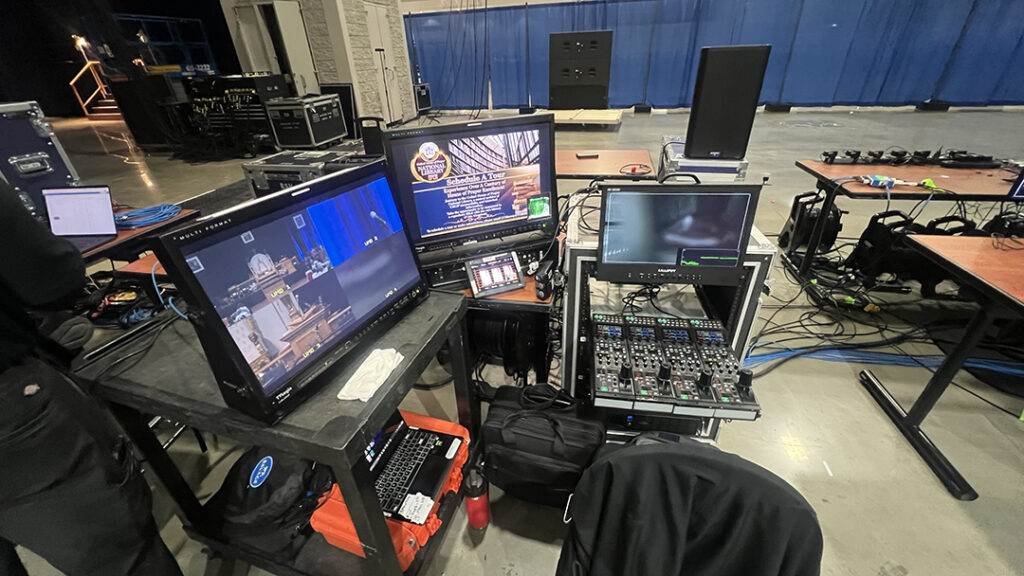
This station shades cameras. His responsibility is to make sure all of the cameras have the proper white balance, color, and exposure. He is only responsible for the cameras that have camera operators. The camera operator is only responsible for capturing the right shot.
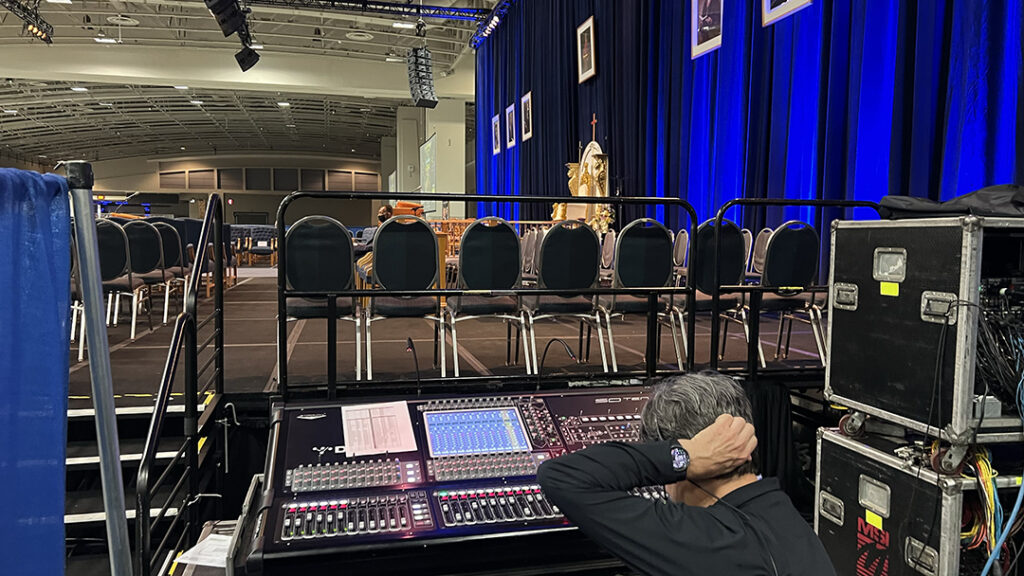
Audio engineer. Of course his role is to control the audio. For this show, there were actually 2 audio engineers.. one front of house (pictured here) who controlled all of the microphones for the stage and band and another back of house, who controlled the speakers/sound for the event space.
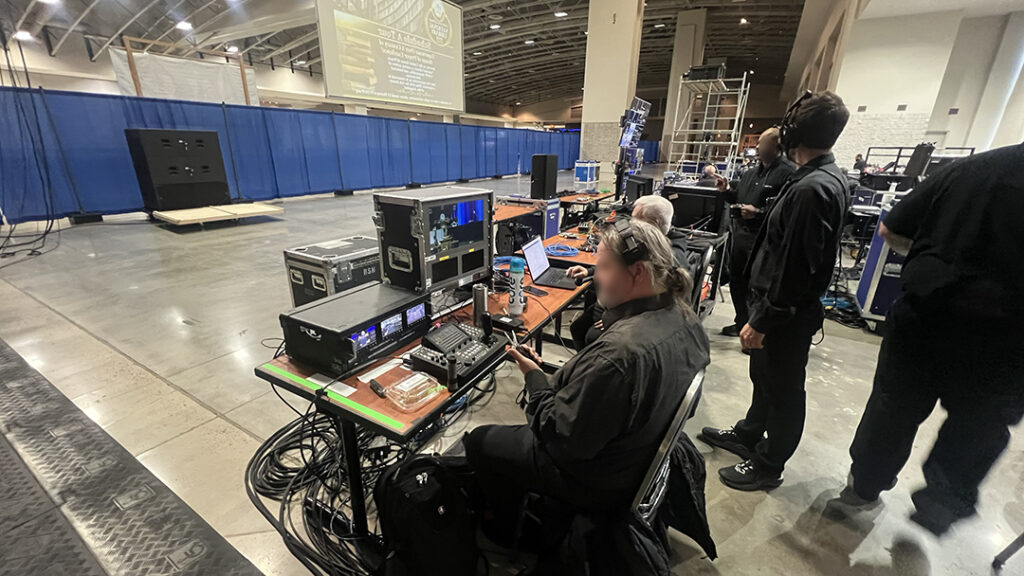
Robo Cam operator. His role was to control the movement, color, and exposure for the robotic cameras at the event. The robo cam operator works hand in hand with the main video engineer, who is calling all the camera shots and switching cameras for the show.
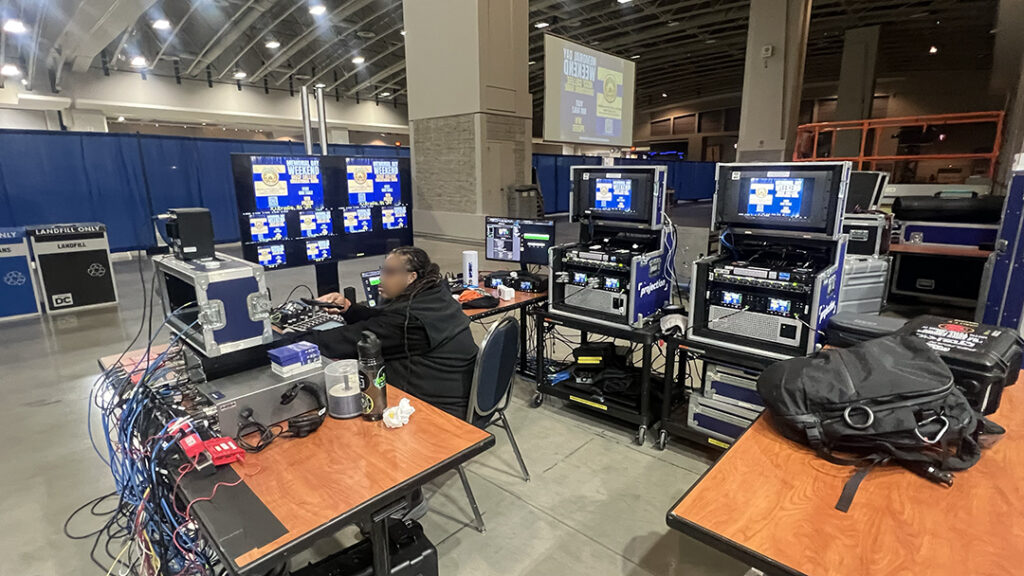
Recording station. In this role, he receives the video signals, audio signals and any presentations that are sent out during the show. Everything is recorded individually as well as recording as seen during the program. Once complete, he is able to hand over a complete and finished digital copy of the show.
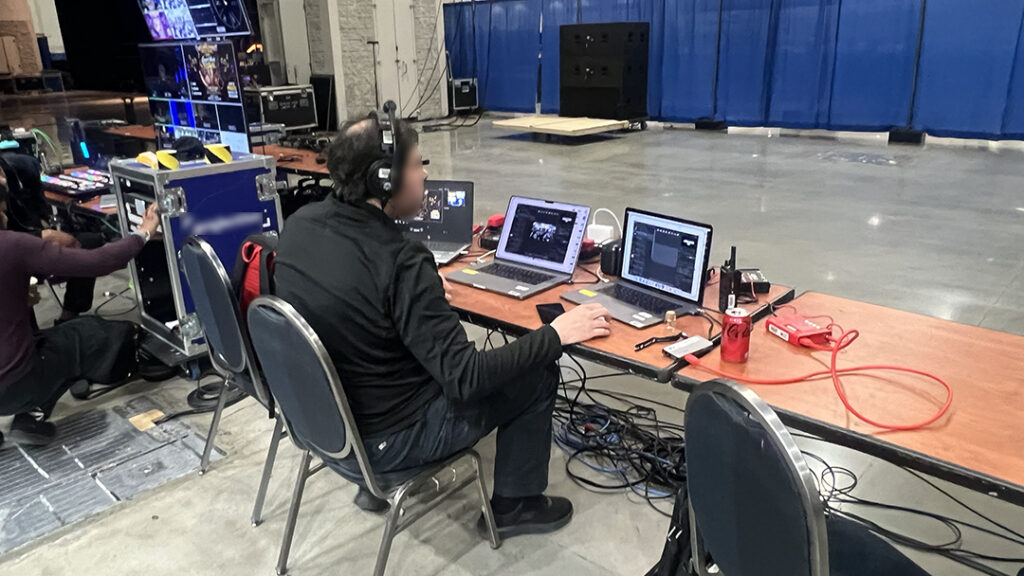
Video Playback. This role is responsible for playing and videos during the show. What is played on these laptops is sent to the venue and shown on the screens and heard through the audio system.
There are other notable roles that are not featured here in this post:
- Lighting
- Support Crew for moving and retrieving equipment. They also assist with setting up equipment and breaking it down at the end of the show.
It’s important to note that solo creators will never be called upon to produce media at this level BUT I believe there is some real insight here as to what roles a solo creator plays when working with their clients.
ROLES OF A SOLO MEDIA CREATOR
- Transportation, Setup & Breakdown
- Lighting
- Audio Recording
- Camera Operation and Recording
- Talent Directing
- Video Editing
THE IMPACT ON BILLING
Earlier in this post, I mentioned that perception is reality, and here is what I mean. If a potential client comes to you and knows that you have a team of people that you work with to accomplish the work you produce, they will enter the contract phase knowing that,s besides yourself, you have people that you need to pay, and with that also comes additional overhead. When you are a one-person shop, sometimes you will run into difficulty charging high prices based on the client’s perception that all of that money is going to one person. If you are a solo creator, it is extremely important that you show value at all stages of the process with your clients. As you do great work, you are going to find that sooner or later, you will have to grow your team to support the volume that your business will need to manage.